2018年7月26日星期四

US Army Awaiting to Test MEDHUB – A Telemedicine Platform

"/
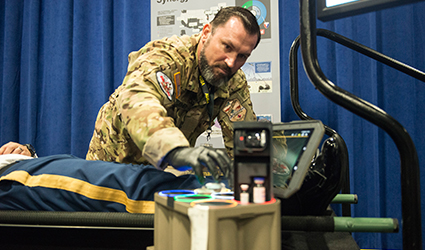
The US Army is testing a telemedicine-based platform designed to send critical data from the field to the hospital and enabling providers to prepare for incoming patients. The connected care service is used by health systems and EMS providers for better care coordination during emergencies.
Currently, army officials are looking for units to test the Medical Hands-free Unified Broadcast or MEDHUB. The digital health hub collects data from varied mHealth devices and automatically sends that de-identified information to the hospital. This was developed by the Army Medical Materiel Agency (AMMA) at Fort Detrick, Md., and Army Medical Materiel Development Activity.
Jay Wang, the Product Manager of Army Transport Telemedicine said, "MEDHUB is really about life-saving situational awareness; The system is designed to give receiving medical teams more information so they can better prepare for incoming patients by gathering the necessary staff and supplies." 
Wang further added, "Imagine you are a medic on the battlefield and you just pick up six of your wounded battle buddies for a casualty evacuation; You are busy trying to save their lives and get them to the next level of care, which is a nearby field hospital that has no idea how many patients you are bringing or their conditions. The goal is to keep the medic focused on performing life-saving tasks for multiple patients and remain unencumbered from documentation and reporting."
The Army is planning to include more digital health tools in the platform. During the early testing phase last year, they tested wireless weight scales with built-in sensors and other mHeallth devices which could easily capture vital signs. This platform will be tested with volunteer units and should be installed by next year.
from Drugdu  https://goo.gl/QgQoHk

2018年7月19日星期四

Mayo Clinic’s new mHealth app to detect Epilepsy

Mayo Clinic researchers found success with an mHealth app - EpiFinder, which can diagnose Epilepsy (A disruption in which nerve cell activity in the brain is disturbed, causing seizures). During recent research conducted at Mayo Clinic, the Epifinder app recognized epilepsy in almost 87percent of the cases.
“The app examines data that is entered into the platform by the clinicians or patients”, said founder Neel Mehta. It’s one of several mHealth devices being used to improve care for people living with epilepsy.
mHealth experts say sensor-embedded wearables can help clinicians to monitor patients dealing with any chronic conditions, like Parkinson’s disease, congestive heart failure, COPD, and diabetes. By examining data collected by the sensors and comparing this along with other factors such as diet, work-out, moods and even weather, it can decide what causes events like seizures, warn patients when they’re moving toward such an event and adjust care plans to improve overall health.
In the Mayo Clinic study, 57 patients were monitored at the clinic’s Epilepsy Monitoring Unit in Arizona. 53 patients suffered seizures at that time. Using video-EEG (cVEEG) monitoring, doctors found that 26 patients suffered epileptic seizures, while 27 received a different diagnosis. Doctors then entered the information on each seizure into the app. In all, the app accurately identified epilepsy or a different diagnosis in 46 cases.
 “The initial testing of the EpiFinder algorithm suggests possible utility in distinguishing between an epilepsy syndrome and an alternative diagnosis in adult patients,” the researchers, led by Erin M. Okazaki, concluded.
They also noted that the app needs more vetting since their research only used doctors who were well-versed in epilepsy treatment. “Further screening of the app among non-epilepsy-specific providers will be important to assess if the current method for gathering data is universally applicable”.
from Drugdu  https://goo.gl/QgQoHk


Power of mHealth technology elucidated by telepsychiatrist

Immediacy plays a key role in the field of telemental health. For someone who needs to contact a doctor in case of medical emergency, Dr. Thomas Kim is just a smartphone app away.
A Texas-based internist and telepsychiatrist believes in the immense power of smartphone apps that have changed the paradigms of patient care. Kim forms part of the new generation of healthcare providers in the virtual space who are leaving the conventional practices of office, clinic or hospital for a mobile health platform that provides a connecting interface for people needing help. The platform has proved its immense usefulness in behavioral health, a field achieving fast popularity for discreet access to healthcare and a hallmark for improved care.
A mobile health app developed by Medici is used by Kim who has stated that the technology helps him make the right connect with patients. He can log on to his smartphone or iPad when at home and make a HIPAA-compliant connection with concerned persons impacted by crisis or who would turn to medication.
From adolescents dealing with depression to swelling ranks of adults dealing with issues of substance abuse, the technology is emerging as a new tool to deal with behavioral health problems.

The post Power of mHealth technology elucidated by telepsychiatrist appeared first on Drugdu.com
from Drugdu  https://goo.gl/QgQoHk

Pneumonia Detection mHealth Wearable

Researchers at Jefferson Health’s Sidney Kimmel Cancer Center are studying whether an mHealth wearable used to monitor breathing in asthma patients can be adapted to detect signs of pneumonia in patients with lung cancer.
The researchers - Shivank Garg, MD, a fourth-year resident in the Department of Radiation Oncology, Maria Werner-Wasik, MD, a Professor of Radiation Oncology, and Adam Dicker, MD, PhD, a Professor and Chair of Radiation Oncology at Jefferson – are using the ADAMM (Automated Device for Asthma Monitoring and Management) patch, developed by Health Care Originals.
The three-inch, triangular patch measures respiration rate and characteristics, wheezing, heart rate and temperature, as well as the user’s activity level.
It’s part of a new wave of digital health devices that aim to enhance remote patient monitoring by giving the care team access to continuous biometric data. Along with patches and wearable monitors, healthcare providers and researchers have been studying the efficacy of tattoos, sensor-embedded bandages, clothing, even ingestibles.
Jefferson’s multi-phase study will focus on whether the ADAMM patch can also accurately detect radiation pneumonitis, an inflammation of the lungs in patients undergoing radiation treatment. Those patients who develop pneumonitis often don’t experience coughing, chest pain and congestion until weeks or even months after treatment, making it difficult for the care team to catch the condition at an early stage.
Since the project aims to collect data from patients at home, Garg, Werner-Wasik and Dicker will also be looking to determine whether the digital health patch can be worn comfortably for long periods of time.
“Can patients wear the device as often as we’d like them to?” Dicker asked in a press release issued by Jefferson. “Can they remember the proper way to charge the device, apply the device? What do they think of the device and the intervention as a whole? Is it acceptable to them, do they mind it, do they feel comfortable wearing it?”
In a later phase of the project, Dicker and his colleagues will look to determine whether the data gathered from the patch can be used to detect pneumonia before it actually sets in, enabling the care team to intervene and prevent hospitalization.
Finally, the researchers will also look to gather patient-reported observations (PRO), such as side effects to treatment that doctors might not see.
“If we’re going to compare the data we get from the device and we want to look at quality of life, it is important that we’re using PROs as a measure to compare to because they are better correlated to how patients are actually doing,” Garg pointed out.
The post Pneumonia Detection mHealth Wearable appeared first on Drugdu.com
from Drugdu  https://goo.gl/QgQoHk

iBeat Raises Investment for its Continuous Monitor mHealth Wearable; Heart Watch

San Francisco-based company iBeat, an mHealth wearable development company has announced new funding from form SCOR Life & Transamerica Ventures and Health Ventures for its mHealth devices, Heart Watch which continuously monitors the heart. iBeat did not state what the total amount was, only that the investments round was “upward of seven figures”.
 “The Heart Watch is one of a kind which keeps continuous monitoring of the heart and offers life-saving assistance in the most critical situation.” Stated Mr. Ryan Howard, founder, and CEO of iBeat.
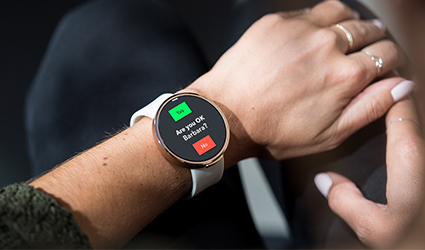
The mHealth wearable has been developed to continuously monitor heart rates, hypoxemia and blood flow. The watch also alerts the user or emergency services if abnormalities are detected. According to the developers, the device is perfect for the aging populations.
According to iBeat, it is planning to spend the investments on further developments of the Heart Watch and to advance marketing. The company also stated that till now they have received more than 11,000 pre-orders for the Heart Watch will start shipping those orders out this summer.
from Drugdu  https://goo.gl/QgQoHk

FDA Gives OK for mHealth Wearable to Combat Opioid Addiction

The FDA recently gave the green light for mHealth wearable, Drug Relief, to help people in the process of opioid withdrawal.
The approval helps to solidify the FDA’s investment in providing digitally based therapeutics for opioid addiction as opposed to prescription drugs.
DyAnsys’ Drug Relief, a wearable that is worn around the patient’s ear, is a neurostimulation therapy that helps to relieve the symptoms of opioid withdrawal such as depression, anxiety and cravings.
Patients can wear the device for up to 5 days and are able to experience relief within an hour of starting neurostimulation.
Srini Nageshwar, CEO of DyAnsys commented in a press release "This device offers hope to those who are suffering from opioid addiction". "We are in a full-blown crisis and we need non-narcotic options and alternatives like this that can make a significant difference for individual patients and their families."
FDA Gives OK for mHealth Wearable to Combat Opioid Addiction
from Drugdu  https://goo.gl/QgQoHk

By Ddu
Share:       

2018年7月13日星期五

Gut Health Monitoring Indigestible Sensor

Scientists from MIT have developed an ingestible chip involving a genetically engineered probiotic E. Coli strain that can monitor the gut health. By consuming this chip, a light would be generated by detecting the blood flow in the gut region. The quantity of light generated would be transmitted to a smartphone, which could easily diagnose any kind of gastrointestinal distress.
To begin with, the scientists focused on gastrointestinal bleeding where light was emitted when the bacteria encountered heme (iron-containing compound forming nonprotein part of hemoglobin). The sensor is about 1.5 inches long and requires about 13 microwatts power. It is equipped with a 2.7-volt battery that could power the device for about 1.5 months if used continuously.
Anantha Chandrakasan, dean of MIT’s School of Engineering and Vannevar Bush, the Professor of Electrical Engineering and Computer Science, one of the senior authors of the study said, “The focus of this work is on system design and integration to combine the power of bacterial sensing with ultra-low-power circuits to realize important health sensing applications.”
Mark Mimee, the co-lead author said, “The goal with this sensor is that you would be able to circumvent an unnecessary procedure by just ingesting the capsule, and within a relatively short period of time you would know whether or not there was a bleeding event.”
Mimee further added, “Most of the work we did in the paper was related to blood, but conceivably you could engineer bacteria to sense anything and produce light in response to thatAnyone who is trying to engineer bacteria to sense a molecule related to disease could slot it into one of those wells, and it would be ready to go.”
Scientists predicted that the sensors can also be created to carry multiple strains of bacteria, in order to diagnose varied conditions.

from Drugdu  https://goo.gl/QgQoHk