2018年9月13日星期四

FDA approves Masimo’s Tiny Breathing Sensor for Paediatric patients in U.S.

"/

The RAS-45 acoustic respiration sensor, developed by Masimo, to function along with the Rainbow Acoustic Monitoring (RAM), was approved by the FDA for use in neonates and infant patients.
A minimum weight of 22pounds/10 kgs of the baby was required earlier to be eligible for use of RAM sensors. This requirement is no longer necessary for the new sanction that enables a convenient monitoring of the rate of respiration in very young pediatric patients.
This is possible because the maximum respiration rate in the sensor has been raised to 120 breaths per minute with an excellent precision between +/- breath every minute.
The sensor can be stuck on to the child and it is fitted with a microphone mimicking device that spots respiration sounds from other background sounds.
Its clarity enables pediatricians to listen to the breathing of the infant as if he/she is listening via a stethoscope. The sensor is stuck on the chest of neonates or infants and on the neck of adults.
 The RAS-45 is connected to a monitor that displays the ongoing respiratory rate and a waveform pattern which is a depiction of the breathing pattern of the child currently and in the earlier hours. The sensor can be interfaced with other sensors as well and the collective data is displayed on the monitor. 
from Drugdu  https://goo.gl/QgQoHk
2018年8月28日星期二

Easy Interoperability for all mHealth Apps

"/

Several top tech companies such as Google, Amazon, Oracle, Microsoft, IBM and Salesforce have vowed to remove barriers which prevent customers from accessing their personal mHealth data whenever they need it. The announcement was made at the Blue Button 2.0 Developer Conference held in Washington D.C.
Seema Verma, administrator of The Centers for Medicare & Medicaid Services (CMS) said, “Imagine all of that data aggregated in one place; Imagine if you could combine that with your genetic information, and that you would have the ability to take that information and give it to researchers, give it to your doctors?”
Last week, CMS released an updated on their new version of Blue Button 2.0, an open API tool which would enable around 53 million Medicare beneficiaries to access five years’ worth of their data.
Mark Scrimshire, who leads the Blue Button 2.0 announced, “We’re trying to create this ecosystem where app developers can go and create tools that are really useful for beneficiaries and hopefully for the wider patient population.” 
Seema Verma further added, “CMS is leading to support MyHealthEData by releasing more data and taking action to drive interoperability and patient control of their data; We are calling on (the) industry to follow our lead and step up to the challenge. It’s time for the rest of the industry to do its part. I have called on insurers to begin releasing claims data as we did with Blue Button 2.0 and make data available to patients.”
from Drugdu  https://goo.gl/QgQoHk

2018年8月22日星期三

Tooth Sensor Measures Intake of Sugar, Salt, Alcohol

Having an accurate record of food and alcohol intake is important for managing a number of diseases including diabetes, various cardiovascular conditions, and alcoholism. Currently, not much practical technology is available to do this aside from smartphone apps, and apps tend to be tedious and require constant vigilance of making sure to input all the data.

Researchers at Tufts University have developed an amazing new sensor, only 2 millimeters on a side, that can be attached to the tooth and measure and transmit readings about glucose, salt and alcohol intake. The device is a combination of a novel, unpowered chemical sensor coupled with RFID (radiofrequency ID) technology. This allows the device to work without requiring a battery, as readings are performed by bouncing RF waves off of it while a special device measures the nature of the returning signal.
The sensor consists of a material that absorbs the compounds to be measured, fattening in the process, and two square gold rings on the outside. As an analyte is absorbed, the gold rings move apart and the returning radio waves that bounce off of the device change accordingly.
Though the device has so far been developed to target a few specific analytes, in principle many others can also be measured. Additionally, it can be attached to the skin and perhaps be useful in measuring chemical composition of sweat, body temperature, and other parameters.
from Drugdu  https://goo.gl/QgQoHk
By Ddu

New Sensor Detects Arsenic Contamination in One Min

According to WHO, around 140 million individuals consume arsenic contaminated water each year, which leads to the development of skin malignancy and harms IQ levels. Current arsenic detectors need diagnostic kits or the aid of laboratory scientists and takes up to half an hour to get the result.

Scientists from the Department of Chemistry at Imperial have developed a small, user-friendly, accurate and cost-effective sensor to test arsenic levels in drinking water within a minute. When a drop of water hits the test strip, it gives the arsenic level count digitally.
University and Science Minister, Sam Gyimah said, “This sensor, to detect harmful levels of water contamination, will make a huge difference across developing nations, potentially saving millions of lives.”
Professor Tony Cass from the Department of Chemistry at Imperial said, “It’s been a real journey to take an idea, conceived of at a London Centre for Nanotechnology research day, through proof of concept research, then into prototyping and scale up and now to field trials in Bangladesh. Now the technology has been spun out we can look forward to scale up of manufacture and ultimately deployment.”
Dr. David Sarphie, CEO of Bio Nano Consulting said, “We were doing some early-stage field trials a few months ago in Bangladesh and a lot of the villagers were actually pleading with us to come and measure their well because they had no idea how much arsenic was in their water.”
from Drugdu  https://goo.gl/QgQoHk

Cytokine Sensor Shedding Light on the Brain

The brain is the most difficult part of the body to assess especially the level of signaling molecules called cytokines. Cytokines are secreted by glial cells, which could make up nearly 90% of all brain cells. Cytokines play a key role in controlling moods, cognition and behavior, which directly influences mental health.

As a result of in-depth research by a team of scientists at the ARC Centre of Excellence for Nanoscale BioPhotonics (CNBP), Macquarie University, University of Colorado Boulder, Central China Normal University and The University of Adelaide, a sensor which can predict cytokine levels in the brain has been developed for the first time.
The world’s first cytokine sensor consists of a modified optical fiber of which the surface is treated with a capture protein. The protein reacts to the presence of cytokine molecules which monitors its release in discrete and targeted parts of the brain.
"Our research in understanding cytokine secretion, neural circuits and how these two work together is essential to improving our understanding of the brain, in health and disease. Our sensor has opened a new window to the brain, but we still have far more to discover," says Professor Ewa Goldys, CNBP Deputy Director and a senior researcher of the project.
"It may be early days in this research but it will be fascinating to see where this cytokine detection takes us. It may prove to be a pivotal point in the understanding, and eventual diagnostic and clinical treatment, of a whole range of health conditions." says Prof Goldys.
from Drugdu  https://goo.gl/QgQoHk

Invention of Sensor to Monitor High Risk Pregnancies

"/

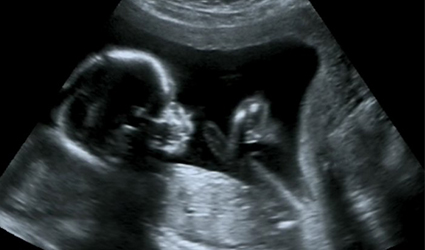
A research team at the Imperial College London have developed a new sensor-based device to display fetal movements and growth in high-risk pregnancies. This is an alternative to the current self-reporting system where the mothers notice changes in fetus movements and seek medical help if needed. But this current method is somewhat inaccurate and either makes mothers anxious or they don’t report the changes to their physicians properly.
Niamh Nowlan from the Imperial College London Department of Bioengineering said, “The movements of a baby in the womb, fetal movements, are an important sign of the baby’s health. However, there is currently no way to monitor fetal movements outside of a hospital.”
This new sensor monitors the baby based on its sounds and movements and can be worn for a longer duration. The system is embedded with acoustic sensors and accelerometers to differentiate the movements between baby and mother.
Nowlan further added, “Our device is the first to use acoustic sensors to detect movements. It is also unique in that it can account for movements of the mother, which other previously proposed sensors cannot. We believe that this is a key aspect of the technology that will lead to successful adoption in the clinic and home.”
The team believes that this wearable will enter the market within ten years.
from Drugdu  https://goo.gl/QgQoHk

Scientists use Infrared Sensor as Means for Drug Discovery

"/

Biophysicists at Ruhr-Universität Bochum (RUB) have used an infrared sensor to discover which active agents influence the structure of proteins rapidly and easily and calculate the amount of time the change persists.

Prof Dr. Klaus Gerwert and Dr. Jörn Güldenhaupt thus executed time-resolved measurements of the changes to the structure of protein scaffolds, caused by the active agents. Their methods look promising for the future development of drugs with minimum side effects.
A report on their research was published by the team, in the journal, Angewandte Chemie on May 17, 2018.
This novel technique offers information on structural changes in the protein in a matter of minutes, also displaying the type of structural change. The sensor works with the help of a crystal to which the protein is bound and infrared light can permeate through the crystal. Infrared spectra are read via the crystal, and the surface is bathed with solutions that may or may not contain active agents. The sensor detects variations to the spectral area of the protein. If any changes are noticed, it is evident that the active agent has distorted the shape of the protein.
from Drugdu  https://goo.gl/QgQoHk